8 seconds
From physical movement to a virtual kick
Watch the participant on the left and the view inside the headset on the right. The split screen shows how the movement appears as a kick in the virtual game.

Technology & rehabilitation

Small movements. New possibilities.
Meet MyMove: wearable technology that turns a person’s movement into digital interaction. Discover how 6Degrees brings movement, virtual activities, and rehabilitation together to support people rebuilding their independence.
Explore four videos, from short demonstrations of virtual soccer to a participant’s personal experience and a television interview about the technology.
Watch the participant on the left and the view inside the headset on the right. The split screen shows how the movement appears as a kick in the virtual game.
Two seated participants wear VR headsets and move their legs during the soccer activity. The clip shows what the exercise looks like from outside the headset.
Hear a participant describe what he sees and feels while using MyMove for virtual soccer. The video includes English subtitles and offers a personal perspective on the experience.
Watch an i24NEWS interview about 6Degrees, its wearable technology, and its rehabilitation applications. The segment combines a studio conversation with demonstrations and includes Spanish subtitles.
Featured article · Sheba Medical Center
· 3-minute read
Discover how Sheba Medical Center is working with 6Degrees to integrate MyMove into amputee rehabilitation. Sheba’s article explains how wearable sensors and virtual activities are designed to help patients manage phantom limb pain, practice movement, and share progress with their care teams.
Read the full article on Sheba’s website (opens in a new tab)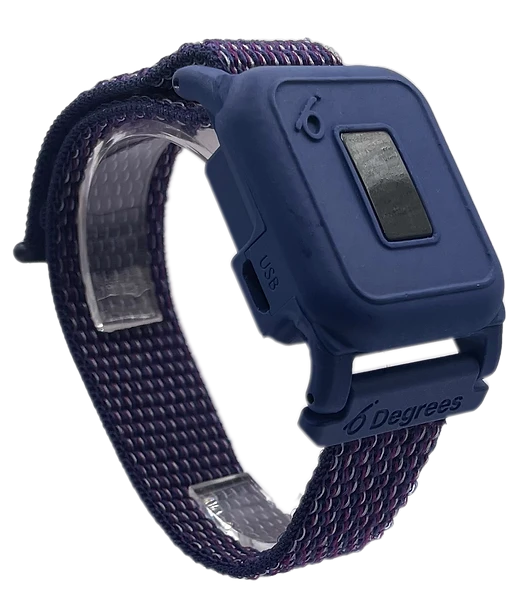
How it works
MyMove’s motion-sensing technology adapts to the user’s movement patterns. Those movements become commands that interact with a digital experience.
A small wearable captures movement from the part of the body being used. In amputee rehabilitation applications, a sensor can be worn above the area of limb loss.
The system learns individual movement patterns and translates them into digital commands, taking the person’s capabilities into account.
The user engages with a game or other digital activity. Rehabilitation applications can also provide movement feedback to help clinicians follow progress.
The person behind the technology
For someone rebuilding life after injury, a digital interaction can offer a moment of control, participation, and connection.
Motion-based control can offer another way to interact with phones, computers, and tablets when conventional touch or mouse control is difficult.
Virtual activities give movement a visible purpose, helping turn an exercise into something a person can participate in and respond to.
In rehabilitation applications, movement information can help therapists understand a person’s activity and follow changes over time.
Take the next step personally
Want to help bring rehabilitation technology to wounded soldiers and people living with limb loss? Call Tzvia to discuss the work, understand the need, and explore how you can become involved. She will personally explain the contribution process when you are ready.
Contributions are arranged personally by phone. 6Degrees is a technology company; charitable gifts, where applicable, are processed by the designated receiving nonprofit.
Educate for Impact connects you with information and giving opportunities. It is not a 501(c)(3) organization and does not accept charitable donations directly. The receiving nonprofit confirms gift acceptance, any designation, and applicable acknowledgment.